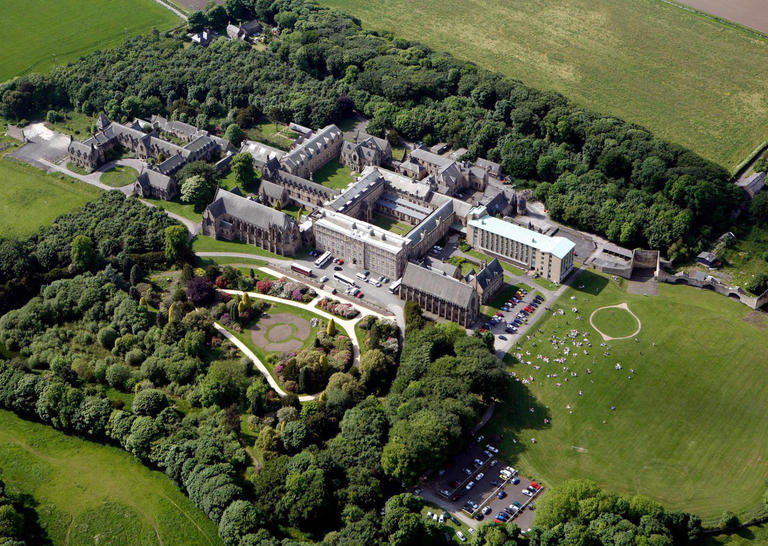
Study Anthropology at Durham University in the UK,
ip target image
You are currently browsing our site with content tailored to students in your country

Anthropology

UK

11

4

What will I learn?

Biological anthropology is the study of the evolution and biological variation of humans. Understanding how humans evolved to become the species we are today, rich in biological and cultural diversity, helps us address major issues affecting our existence today.,Our BSc Anthropology degree is designed to give you a broad understanding of humanity, from our evolutionary origins to our present day behavioural and cultural diversity. Biological anthropology is closely related to archaeology and primatology, and so you will also gain an appreciation of how humans are related to other species, living and extinct. You will study biological anthropology in the context of a broad approach to the subject including social anthropology as well as interdisciplinary perspectives on health. As you move through your degree, you will shift from being a consumer to a generator of knowledge, ready for professional or postgraduate life. You can also apply to add a placement year or a year abroad to your degree, increasing the course from three years to four.In the first year, you will receive a thorough grounding in the theory and practice of anthropology in the broadest sense, addressing the core disciplines of social and biological anthropology as well as interdisciplinary perspectives on health. In your second year, you will develop a deeper and more complex grasp of biological and evolutionary anthropology and continue to gain ‘hands-on’ experience of conducting research through a series of local field trips and activities. In your final year, you will design and carry out your own research project for your dissertation and take part in our residential Field Course module, an intensive 7-day experience at one of several European destinations, or online as part of our Virtual Field Course.Course structureYear 1 modulesCore modules:People and Cultures provides an introduction to the people and cultures of the world from a social anthropological perspective and prepares you for further critical study of the discipline.Human Evolution and Diversity introduces how humans evolved over the past few million years to become the unique species we are today, rich in biological and cultural diversity. We also cover our relationships with extinct hominins and our closest primate relatives.Being Human: An Introduction to the History and Practice of Anthropology provides an overview of the history of anthropology, including the major theoretical developments and debates, and how these affect the practice of anthropology today.Doing Anthropological Research provides hands-on training in anthropological research methods, both quantitative and qualitative. This module will prepare you for future research projects including fieldwork and your dissertation, and allow you to develop highly transferable research skills.Health, Illness and Society promotes the value of a multidisciplinary perspective to the study of health and illness, and gives insight into how social, cultural, biological and evolutionary factors interact in the study of health and disease.You will learn about the potential for medical anthropology and evolutionary medicine to contribute to health policy and planning in diverse human societies.Year 2 modulesCore modules:Anthropological Research Methods in Action provides opportunities for inquiry-based learning by addressing key anthropological issues beyond the classroom. You will learn to develop and apply research skills relevant to the different areas of anthropology, including field-based research.Research Project Design builds upon previous methods training by providing the skills necessary to develop independent dissertation projects.Palaeoanthropology: The Story of Human Evolution will develop your understanding of the patterns and processes of human evolution including speciation and adaptation with particular reference to the hominin fos

Study options

Full Time (3 Years)

Tuition fees
£27,000.00 (US$ 34,869) per year
This is a fixed fee

*Price shown is for indicative purposes, please check with institution

Start date

October 2026

Venue

Durham City

Palatine Centre,

Durham,

DH1 3HP, Northern England, United Kingdom

Full Time (3 Years)

Tuition fees
£28,000.00 (US$ 36,160) per year
This is a fixed fee

*Price shown is for indicative purposes, please check with institution

Start date

September 2026

Venue

Durham City

Palatine Centre,

Durham,

DH1 3HP, Northern England, United Kingdom

Entry requirements

For international students

A level offer – AAB.BTEC Level 3 National Extended Diploma/OCR Cambridge Technical Extended Diploma – DDD.IB Diploma score – 36 with 665 in higher level subjects.Science A levelsApplicants taking Science A levels that include a practical component will be required to take and pass this as a condition of entry. This applies only to applicants sitting A levels with an English examination board.

*There may be different IELTS requirements depending on your chosen course.

Add to my favourites

Product of

Have you discovered our IDP community?

Get to hear first-hand experiences from past students, join groups and more with our new community feature!

View community now!
cta banner image

About Durham University

Durham University connects a rich history with modern values to create a well-respected and forward-thinking institution.

  • Durham hosts over 18,000 students from across the world
  • Named top 30 international university in the world
  • Durham is one of the top 5 universities in the UK
  • The university received the TEF gold teaching standard

Get in touch