Study Climate Science at Durham University in the UK,
ip target image
You are currently browsing our site with content tailored to students in your country

Climate Science

UK

9

What will I learn?

Gain the knowledge and skills you need to understand past, present and future challenges related to climate change. In BSc Climate Science you can explore ways in which society can mitigate this global crisis.,Climate change and humanity’s response to it will define life on the planet for billions of people but despite this there are few undergraduate degrees that focus on the broader climate problem. This BSc in Climate Science uniquely offers a big-picture approach encompassing both recent and past climate change and its impact on Earth and human systems. It provides a holistic overview of climate science and equips you with the knowledge and skills to lead society towards the mitigation of this emergency. Our flexible degree puts you in control. It gives you both the fundamentals and increased specialisation as you progress through the course, allowing you to choose a pathway of most interest to you. The degree acknowledges the breadth of the field of climate science and provides you with a solid background in diverse aspects of climate science that span geological time. In the first year, you will learn about climate change and develop your understanding of Earth processes and resources. In Year 2, you will learn about isotopes and can opt to study glaciers, the carbon cycle, how the Earth’s climate has varied in the past and how scientists reconstruct past climate change. In your final year, you will study Earth Systems and can choose to learn about how climate change impacts coastal and alpine environments, atmospheric circulation, how it affected ancient civilisations, or explore the geochemistry of the environment. You will also undertake a dissertation and conduct fundamental research into an advanced topic of your choice related to climate science.Course structureYear 1 modulesCore modules:Environmental Earth Science coversthe Earth’s water cycle in terms of both quantity and quality. You will learn about the composition and materials of the Earth, the mode of formation, distribution and extraction of the Earth's resources and energy.Introduction to Climate Change introduces you to contemporary climate change, incorporating the physical science underpinning our understanding of past, present and future climate change. It also explores some of the most serious impacts and competing perspectives around major climate change controversies. Introductory Data Science introduces the fundamentals of data acquisition and analysis in a geoscientific context. You will learn how to apply computational tools to manipulate and visualise a range of scientific and geospatial data.Sustainability introduces global issues and concepts around sustainability, with an emphasis on aspects most relevant to Earth Sciences such as water, climate, energy and mineral resources, food resources, and natural hazards, and is thematically taught around the United Nations Sustainable Development Goals (SDGs).Optional modules:In recent years, optional modules have included: Field StudiesMathematical Methods in GeosciencesFurther Mathematics for GeoscientistsUnderstanding Earth SciencesPlanet under Pressure.Year 2 modulesCore modules:Isotopes and Climate covershowisotopes can be used in understanding the environment and climate systems as well as identifying major events in the Earth's climate evolution. The module covers the human impact on the global climate and how to understand and analyse future climate change predictions.Earth System and Climate: The Quaternary enhances your understanding of the interconnectivity between different components of the Earth System and their relevance to climate, with a focus on modern and Pleistocene climate change and its causes.Earth System and Climate: Long Term Processes provides anunderstanding of the interconnectivity between different components of the Earth System and their relevance to climate, with a focus o

Study options

Full Time (3 Years)

Tuition fees
£33,250.00 (US$ 42,940) per year
This is a fixed fee

*Price shown is for indicative purposes, please check with institution

Start date

October 2026

Venue

Durham City

Palatine Centre,

Durham,

DH1 3HP, Northern England, United Kingdom

Full Time (3 Years)

Tuition fees
£34,000.00 (US$ 43,909) per year
This is a fixed fee

*Price shown is for indicative purposes, please check with institution

Start date

September 2026

Venue

Durham City

Palatine Centre,

Durham,

DH1 3HP, Northern England, United Kingdom

Entry requirements

For international students

A level offer – AABIncluding two science A levels from Mathematics, Further Mathematics, Physics, Chemistry, Geology, Geography, Environmental Science, Economics, and Biology or Psychology are required.BTEC Level 3 National Extended Diploma/OCR Cambridge Technical Extended Diploma – DDDIB Diploma score – 36 with 665 in higher level subjects, including two science subjects from list above.Science A levelsApplicants taking Science A levels that include a practical component will be required to take and pass this as a condition of entry. This applies only to applicants sitting A levels with an English examination board.

*There may be different IELTS requirements depending on your chosen course.

Add to my favourites

Product of

Have you discovered our IDP community?

Get to hear first-hand experiences from past students, join groups and more with our new community feature!

View community now!
cta banner image

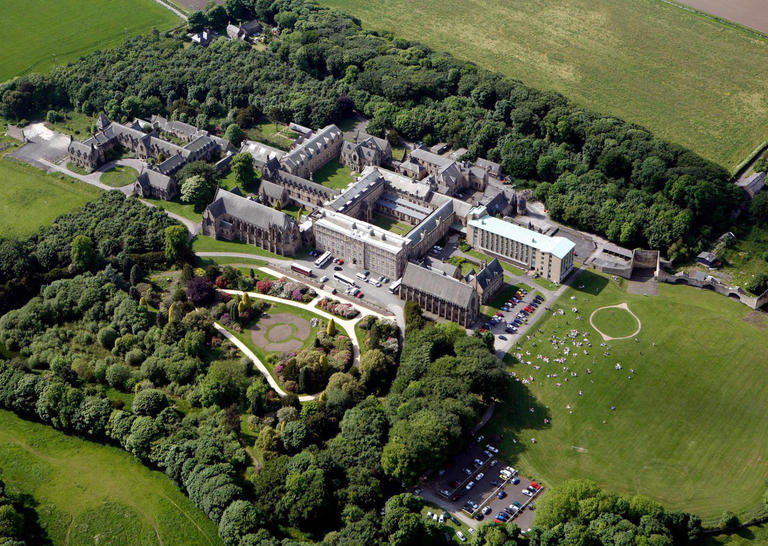
About Durham University

Durham University connects a rich history with modern values to create a well-respected and forward-thinking institution.

  • Durham hosts over 18,000 students from across the world
  • Named top 30 international university in the world
  • Durham is one of the top 5 universities in the UK
  • The university received the TEF gold teaching standard

Get in touch