Chemistry: Fees & Entry Requirements at Durham University, UK

Chemistry

UK

6

What will I learn?

A highly-valued degree that can be used as the first step towards further academic learning and research in chemical sciences or take you directly into a role across a wide variety of industries and commerce.,The chemistry department at Durham is one of the leading departments in the UK and within the Top 100 across the world.When you choose the BSc in Chemistry you will join a dynamic and focused learning community that is home to multiple research institutes, a range of first-class facilities and experts with close links to industry. Current developments in both research and industry are used to bring theoretical learning to life. Chemistry degrees at Durham offer a high level of flexibility. The BSc in Chemistry contains the same core curriculum in Years 1 and 2 as our other chemistry degrees, and you can switch to one of the other degrees up to the end of the second year. You will learn how chemistry is the central science with learning interfaces with biosciences, earth sciences, engineering, physics and astronomy. You will be exposed to cutting-edge analytical techniques and learn how they can be used to assist research and tackle global issues. Graduates are ready to either move straight into employment in a wide range of industries or advance into further studies and scientific research.You will build strong foundations in inorganic, organic and physical chemistry and learn practical skills in our modern teaching laboratories. In your final year, you will continue to learn the core aspects of modern chemistry and examine how it is applied to real-world issues. Your studies will culminate in a research-led dissertation.Course structureYear 1 modulesCore modules:Core Chemistry 1 provides the foundation for your future studies and covers organic, inorganic and physical chemistry.Practical Chemistry 1A and Practical Chemistry 1B are two modules of laboratory work. These will allow you to learn and practise the skills required to accurately and safely use chemical reactions to create target substances and concludes with project work.The Mathematical and Experimental Tools Required in Chemistry (METRiC) module builds on your pre-university mathematical skills and ensures that you understand the vocabulary of physics and biology that interfaces with chemistry.Introduction to Materials Chemistry introduces the fundamentals of solid state and materials chemistry.Optional modules:In recent years, optional modules have included: Molecules in Action Finally, you will choose some optional modules allowing you to tailor your learning in subjects such as mathematics, biology, languages or the chemistry module Molecules in Action.Year 2 modulesCore modules:Core Chemistry 2 builds your knowledge of inorganic, physical and organic chemistry into more specialised concepts.Chemistry of the Elements focuses the principles of bonding as well as the unique chemistry of the transition metals.Structure and Reactivity in Organic Chemistry explores how the structure of molecules affects reactions.Properties of Molecules advances your understanding of physical chemistry in the areas of magnetic resonance, surface chemistry and electrochemistry.Practical Chemistry becomes more intensive and advanced in Year 2.Optional modules:In recent years, optional modules have included: Biological Chemistry or Computational Chemistry Once again, you can personalise your studies with one option module, including Biological Chemistry or Computational Chemistry.Year 3 modulesCore modules:Core Chemistry 3 takes your final year knowledge up to degree standard.Chemistry Dissertation You will also produce a research-led Chemistry Dissertation which will demonstrate your attained skills of literature review, data collection and critical analysis as well as literacy and presentation skills.

Which department am I in?

Chemistry

Study options

Full Time (3 Years)

Tuition fees
£33,250.00 (36,22,794) per year
This is a fixed fee

*Price shown is for indicative purposes, please check with institution

Start date

October 2026

Venue

Durham City

Palatine Centre,

Durham,

DH1 3HP, Northern England, United Kingdom

Full Time (3 Years)

Tuition fees
£34,000.00 (37,04,511) per year
This is a fixed fee

*Price shown is for indicative purposes, please check with institution

Start date

September 2026

Venue

Durham City

Palatine Centre,

Durham,

DH1 3HP, Northern England, United Kingdom

Entry requirements

For international students

A level offer – A*AA including Chemistry and Mathematics.BTEC Level 3 National Extended Diploma/OCR Cambridge Technical Extended Diploma – D*DD and A level requirements as above.IB Diploma score – 38 with 666 in higher level subjects, including Chemistry and Mathematics (either Analysis and approaches HL or Applications and interpretations HL).Science A levelsApplicants taking Science A levels that include a practical component will be required to take and pass this as a condition of entry. This applies only to applicants sitting A levels with an English examination board.

*There may be different IELTS requirements depending on your chosen course.

Add to my favourites

Product of

Have you discovered our IDP community?

Get to hear first-hand experiences from past students, join groups and more with our new community feature!

View community now!
cta banner image

About Durham University

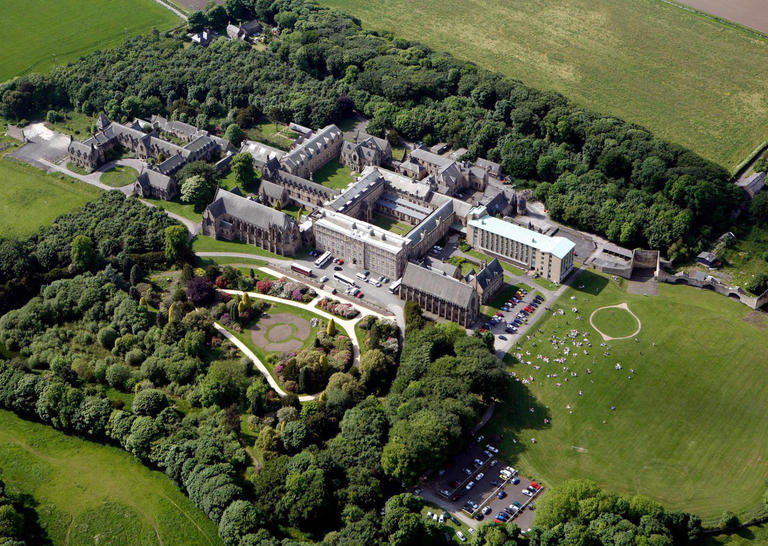
Durham University connects a rich history with modern values to create a well-respected and forward thinking institution

  • Durham hosts over 18,000 students from across the world
  • Ranked 34th in the world for graduate employability
  • Durham is one of the top 10 universities in the UK
  • The university received the TEF gold teaching standard
Get FREE expert advice